This article aims to assess the state of the art of research on digital platforms' business models (DPBMs).
The study follows a grounded theory literature review of 246 studies on the intersection of digital platforms and business models.
The findings reveal that research in this domain is fragmented across several inter-related fields. Publications are also scattered across a multitude of journals, and many of them do not provide a clear definition of the main concepts used or use different concepts interchangeably. The study synthesized a framework with key themes from the literature. The authors then developed an integrated definition of DPBM. Finally, the authors propose a research agenda to analyzing the alignment between value creation and capture for hybrid DPBM, developing artifacts for hybrid DPBM and studying the unintended consequences of DPBM.
The study presents a comprehensive and updated literature review on DPBMs. Furthermore, using an integrative approach, it develops a definition of DPBM. Finally, it proposes a research agenda for the field. Database choices, as well as inclusion and exclusion criteria, represent a limitation of this study.
This paper highlights a rich body of literature that contributes to understanding of how this research field is organized and proposes an integrative definition of DPBM. Further, it presents avenues for advancing knowledge in this field.
Introduction
Digital platforms are not only reshaping industries but also significantly impacting society (Clauss et al., 2018). The most valuable firms on the planet are indeed digital platforms. Together, Microsoft, Apple, Amazon, Alphabet, Facebook, Alibaba and Tencent represented more than $10 trillion in market value in late 2021. These companies' success and the rapid development of many new digital platform-based companies such as Airbnb, Netflix and Uber encouraged entrepreneurs, investors and researchers to seek an understanding of how the business models (BM) of the digital platforms are structured.
Digital platforms have been widely studied by scholars in strategy, technology management, information systems, economics, entrepreneurship and innovation management. However, much of the literature is not convergent, and there are significant differences within and across these disciplines in relation to how they define digital platforms, their focus of research, as well as the supporting theories they use (Bonina et al., 2021). The different perspectives and the absence of converged concepts have produced a highly fragmented and imprecise literature (Mallon, 2021).
Täuscher and Laudien (2018) demonstrated the value of BMs as a unit of analysis for classifying and exploring digital platforms. The authors argue that understanding the BM's core elements makes it easier to transcend differences in terminology. While the literature on digital platforms is vast, including complete literature reviews (e.g., Thomas et al., 2014; Liu et al., 2021), there is a limited body of research focusing on understanding the actual BMs supporting these platforms. Furthermore, an analysis of this research stream reveals that it is fragmented, lacks a strong theoretical underpinning, and, consequently, is not conducive to the systematic development of knowledge.
As a result, this article aims to assess the state of the art of research on DPBMs. To achieve this goal, we followed Wolfswinkel et al. (2013) and Suddaby (2010)'s literature review guidelines. Our study offers three main contributions. First, we present a comprehensive and updated literature review on DPBMs. Second, using an integrative approach, we develop a definition of DPBM. Finally, we propose a research agenda for the field.
The remainder of the article is structured as follows. In the next section, we outline the background of platforms and BMs. This is followed by a description of our methodological approach. In the subsequent section, we present the findings to address our research questions. Finally, we highlight our theoretical contributions, practical implications, as well as limitations and areas for future research.
Background and definitions
In order to develop a robust literature review, it is necessary to have clarity on the phenomena being investigated as well as the boundaries of the study (Kitchenham, 2004; Chauhan et al., 2022). Therefore, this section focuses on briefly explaining and defining the extant literature on digital platforms and BMs.
Digital platforms
Digital platform literature has its theoretical foundations in platform and information systems research. Consequently, it reflects two distinct theoretical perspectives: one inspired by economic theory and the other influenced by engineering design (Gawer, 2014). The economic approach goes back to the works of Rochet and Tirole (2003, 2006), which conceptualize platforms as types of markets. Here, “platforms enable interactions between end-users and try to get the two (or multiple) sides on board by appropriately charging each side” (Rochet and Tirole, 2006, p. 245). The two-sided platform provides a common meeting place to facilitate interactions between members of two distinct customer groups. They play an essential role throughout the economy by minimizing transaction costs between entities and creating a mutually beneficial arrangement for the parties involved (Evans and Schmalensee, 2011).
The engineering design approach conceptualizes platforms as modular technological architectures. This research stream has its foundations in innovation, product development and echoes the resource-based logic of advantage creation (Thomas et al., 2014). As a result, it is highly focused on innovation, and it presents a supply-side perspective. Based on this approach, digital platforms are understood as the “extensible codebase of a software-based system that provides core functionality shared by the modules that interoperate with it and the interfaces through which they interoperate” (Tiwana et al., 2010, p. 675).
Because these two perspectives have developed separately, the term digital platform is used in different ways. For example, while De Reuver et al. (2018, p. 127) argue that “platforms that merely mediate between different user groups but offer no extensible codebase should not be considered digital platforms in the IS discourse,” other researchers consider digital platforms any platform that uses digital technology to mediate two or more user groups (Bonina et al., 2021; Sutherland and Jarrahi, 2018). Furthermore, the different perspectives and distinct units of analysis used across studies restrain the comparability between findings in the literature (De Reuver et al., 2018). Consequently, there is some degree of specificity and idiosyncrasy in this theme, undermining the coherence and cumulativeness of the results of this research stream (Thomas et al., 2014).
There have been some attempts to propose a more integrated definition of digital platforms – e.g.Gawer (2014) and Baldwin and Woodard (2009). While these studies provide a step toward a more integrated definition of digital platforms by analyzing different research streams, they are still heavily focused on technological aspects and do not consider important economic elements of digital platforms such as intermediation.
A recent article suggests the digital platform ecosystem as a paradigm to integrate these different perspectives on platforms (Hein et al., 2019). This approach applies the product family logic of modularity, standards and product differentiation to a product or service system broader than an internal or supply-chain-level product family. Thus, it incorporates theoretical elements of the economic stream, such as network externalities and market power (Thomas et al., 2014). As a result, in this approach, “a digital platform ecosystem comprises a platform owner that implements governance mechanisms to facilitate value-creating mechanisms on a digital platform between the platform owner and an ecosystem of autonomous complementors and consumers” (Hein et al., 2019, p. 4). However, while this definition emphasizes the creation of value between owners and complementors, this research stream has a gap in how value is captured and distributed for the ecosystem actors (Hein et al., 2019). Due to this gap, we argue that the digital platform construct needs to also contemplate the delivery and value capture dimensions.
Bonina et al. (2021) and Cusumano et al. (2019) define a digital platform (2019) according to its principal purpose. Thus, there are two main types of digital platforms: innovation platforms and transaction platforms. In the innovation platform, value comes mainly from enabling third parties to build their products or services that utilize and improve the platform. On the other hand, value comes mostly from allowing different sides of a market to interact in the transaction platform. Even though this definition reflects the primary mechanisms for creating value, it does not capture the platforms' complexity and differences in capture and delivery value mechanisms. Furthermore, the authors analyze platform function at an industry level (or ecosystem). Still, we argue that two-sidedness (or multi-sidedness) is a firm's decision about its BM, and it is not a feature of markets or industries (Broos and Ramos, 2017). Consequently, we define digital platforms at the organizational level using the business model as a theoretical lens. In the next section, we briefly discuss the BM concept.
Business models
The BMs are commonly understood as a link between future planning (strategy) and their practical implementation (process management) (Wirtz et al., 2016). The concept is essential for any organization since it provides a means to understand, analyze, communicate and manage strategic choices among its stakeholders (Al-Debei and Avison, 2010). There is still a lack of consensus in the literature for a single definition of the term (Al-Debei and Avison, 2010; Foss and Saebi, 2018). One of the most accepted definitions for a BM is proposed by Teece (2010) (Saebi and Foss, 2015; Zott et al., 2011). The author defines a BM as the “design or architecture of the value creation, delivery and capture mechanisms it employs” (Teece, 2010, p. 172).
More recently, adopting an organizational perspective, researchers describe BMs as devices for structuring and designing organizations. BMs are understood as a manifestation of how organizational variables are configured, how the company structures its transactions with external stakeholders and the consequences of those configurations on company performance (Saebi and Foss, 2015). Accordingly, the BM is an activity system performed by the focal firm and third parties (partners, suppliers, customers). As a result, “the firm's activity system may transcend the focal firm and span its boundaries but will remain firm-centric to enable the focal firm not only to create value with its partners, but also to appropriate a share of the value created itself” (Zott and Amit, 2010, p. 2017). Under this perspective, BMs are defined as “the content, structure, and governance of transactions within the company and between the company and its external partners that support the company in the creation, delivery, and capture of value” (Saebi and Foss, 2015, p. 204).
Adopting the organizational perspective of the BM, we argue that this is a robust theoretical lens to define and analyze digital platforms. There are three main reasons for our approach. First, the BM encompasses relevant aspects of digital platforms and (Ardolino et al., 2020) allows identifying different organizational choices related to how digital platforms create, deliver and capture value. Second, the concept considers external partners as important actors in creating, delivering and capturing value for organizations. Finally, the BM is used in the digital platform research not only to assess how value is (co)created and captured but also to highlight how value is (co)destroyed or lost (Andreassen et al., 2018; Bivona and Cosenz, 2019). Consequently, understanding the main aspects of the DPBMs contribute to a better knowledge of the complexity of this phenomenon and their different outcomes.
Research design and methods
This article aims to assess the state of research on DPBMs. Specifically, we reviewed the literature at the intersection of the digital platforms and BM with particular attention to five aspects of this research field: (1) characteristics in terms of primary sources, countries, research methodologies and other descriptive data; (2) main frameworks and theoretical foundation; (3) primary definitions; (4) key themes; and most importantly; and (5) the gaps in this field.
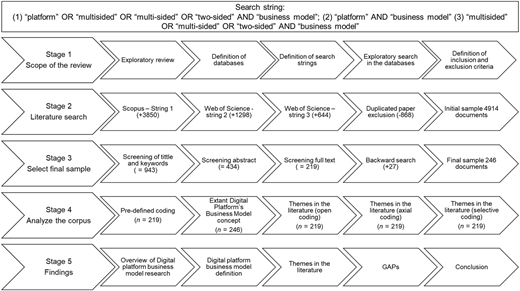
For this purpose, we selected an inductive approach to review the literature based on the Grounded Theory Literature-Review Method proposed by Wolfswinkel et al. (2013). Therefore, our review unfolded in five stages to (1) define the scope of the review, (2) search the literature, (3) select the final sample, (4) analyze the corpus and (5) present the findings (Wolfswinkel et al., 2013). Our research method is summarized in Figure 1.
In the first stage, our aim was to define the scope of the review. Therefore, we carried out a preliminary literature review, which was critical to fine-tuning the specific objectives for this paper as well as identifying the main keywords, databases and inclusion and exclusion criteria. We found that research on DPBMs is multidisciplinary. Thus, we selected Web of Science (WOS) and Scopus databases, which are multidisciplinary and index thousands of journals (Thomas et al., 2014). The search strings (Kitchenham, 2004) were built with the following keywords: platform, multisided, multi-sided, two-sided and BM (Figure 1). After an exploratory search in the databases, we defined primary inclusion and exclusion criteria. The inclusion criteria consist of peer-reviewed articles published in journals and conferences, which were written in English and met the purpose of the review. The option to include conference papers aims to minimize the publication bias, even though, the present review does not include grey literature, such as technical reports, or work in progress (Kitchenham, 2004), as it (usually) does not go through a peer-review process. Finally, following Snelson's (2016) approach, we did not use the impact factor as the justification for limiting the search scope. Instead, we used this information only as a descriptive factor in the literature review. Table 1 synthesizes the inclusion and exclusion criteria.
The literature search stage was conducted in February 2022 and in both databases, the strings were searched in the topic field (Article Title, Abstract and Keywords). The results were filtered by peer-reviewed journals and conference papers published until 2021, which were written in English. As a result, 5,792 documents were identified whose metadata was exported in BibTeX format to Bibliometrix software (Aria and Cuccurullo, 2017). The software automatically excluded 868 duplicated papers, resulting in an initial sample of 4,914 papers for the next stage.
The third stage of our methodology aims to include all relevant studies in the field as well as to avoid the inclusion of documents peripherally related to the research theme. We analyzed the initial sample in four steps. First, we filtered the sample by articles that contained both search terms in the title or keywords. For example, if the paper has the term platform (or two-sided market) in the title and BM in the keywords or vice versa, it was included for analysis in the next step. If only one of the terms is present in the title or the keywords, the article was excluded (943 papers selected). Second, we read abstracts to identify relevant papers for review. Papers included in this step meet at least one of the following inclusion criteria: (1) studying the BM of a firm that uses platforms or (2) studying the BM of digital platforms. At the end of this process, a total of 434 papers were selected.
In the third step, we read the papers' content and, in addition to the inclusion criteria from the previous step, we also analyzed if the platforms being studied are technologically mediated, enable interaction between user groups and allow those user groups to carry out a set of defined tasks (Bonina et al., 2021). We added this inclusion criterion because we identified many studies analyzing traditional BMs of technical platforms (e.g., energy platforms). In this step, we also did a manual inspection to remove additional duplicates that have been submitted in two different conferences or had not been entered into the databases in the same way. For example, the author's name or title might have been entered differently in the databases. We also excluded different document types (e.g., editorials, lecture notes, research in progress and so on) not identified in metadata, leaving a total of 219 selected articles in the sample. Finally, our fourth step is to conduct a backward search (Wolfswinkel et al., 2013) to select the final sample. For this purpose, we used Bibliometrix to extract common citation information within each paper. This process led us to include an additional 27 sources. Although these sources do not meet our inclusion criteria, they are the primary references to define the platform, multi(two)-sided market and BM, so they were analyzed in the stage of defining the DPBM concept. Our final sample includes a total of 246 articles (see supplementary material).
In the fourth stage of our methodology, we carried out the corpus analysis. This stage consisted of four steps: (1) pre-defined coding, (2) identification of the main themes in the literature on DPBMs and (3) definition of the concept of DPBMs. In the first step, based on the coding process presented in (Vial, 2019), we collected several pre-defined, descriptive elements on each paper, which are summarized in Table 2.
During the research themes step, we read individual papers to develop open codes in the first instance (Saldaña, 2021; Wolfswinkel et al., 2013). The analysis resulted in the development of 62 open codes (Saldaña, 2021; Wolfswinkel et al., 2013). Next, we analyzed conceptual similarities of the open codes to generate axial codes (Saldaña, 2021; Wolfswinkel et al., 2013). Consequently, we developed 41 axial codes. Finally, after the iterative analysis of the axial codes, we have identified 11 selective codes (Saldaña, 2021; Wolfswinkel et al., 2013) as the main themes in the literature on DPBMs.
The third step of corpus analysis was to study extant definitions of the main concepts for this research: platform, BM, platform business model, etc. We used the articles identified in the backward process only in the third step. First, we classified excerpts from articles by coding them as a concept. We analyzed each group of passages separately to identify common elements in the definitions. Based on this analysis, we redefined the concept of the DPBMs based on the following criteria for construct clarity: definitions, scope conditions and relations between constructs (Suddaby, 2010). The fifth stage of our methodology is to report the findings, which are presented in the next sections.
Findings
The results are organized into three subsections. The first subsection describes an overview of research on DPBMs in terms of primary sources, geographical distribution, research methodology, frameworks and theoretical foundation. The next subsection defines DPBMs. The last subsection explores the most relevant themes discussed by the authors.
Overview of research on digital platforms' business model
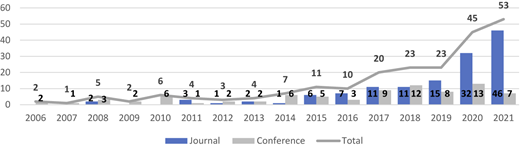
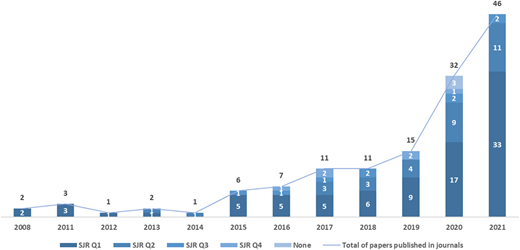
Overall, our results indicate that, as an emerging research domain, scholars' attention to DPBMs has significantly increased in the last five years (Figure 2). It is important to also highlight the high growth of publications in high-impact journals in the same time frame (Figure 3).
The articles were published in 163 different outlets, covering a variety of subject fields. This result corroborates the prior findings of the exploratory review, which indicated that the topic of this research is interdisciplinary and fragmented. Table 3 shows the journals with at least three publications in the sample. The top five journals are Journal of Business Research, Journal of Cleaner Production, Journal of Service Management, Sustainability (Switzerland) and Technological Forecasting and Social Change.
In terms of conferences, the International Conference on Intelligence in Next Generation Networks had the highest representation with six titles, followed by the ACM International Conference Proceeding Series, Americas Conference on Information Systems, European Conference on Information Systems, IEEE International Conference on Engineering, Technology and Innovation, and International Conference on Mobile Business with three titles each. Most of these conferences are categorized in computer science as their subject area.
Table 4 provides an overview of the types of research present in the sample. We considered empirical research, all research based on observation or experience, including primary or secondary data collection. Papers with intuition-based reasoning and academic literature reviews were classified as non-empirical research (Scornavacca et al., 2006). As a result, approximately 73% of our sample is composed of empirical research (159 sources), of which close to 78% (122 sources) are based on case study design. This result may indicate that research related to the DPBM has not yet been consolidated, as discussed by Gomes et al. (2018).
Table 5 presents the most frequent research contexts. Even though primary context research on digital platforms is focused on the software industry, the sample also shows a significant number of studies on multiple contexts or focused on aspects such as mobility, e-commerce, telecommunications, education or IoT.
Table 6 shows the theoretical perspectives used in the articles. It is important to note that around 25% of the papers do not present a specific conceptual foundation or theory to analyze their phenomenon of interest. Furthermore, some articles use BM or platform literature as a foundation but do not explicitly state their theoretical contribution. Additionally, even though there are different frameworks for the BM, unexpectedly, our study found that 46% of the papers do not use any framework and 21% developed their framework based on extant literature (see Table 7). However, many of these new frameworks are not validated before their application.
Table 8 provides a summary of articles by the level of analysis. Although surveys and case studies may rely on lower-level units of analysis to collect data (e.g., individuals) (Wolfswinkel et al., 2013), we report on the level of analysis under investigation. Most articles focus on the platform level (n = 104), the industry level (n = 60) and the organizational level (n = 22). Only in six instances, there was no clear level of analysis identified by the authors (N/A category).
Table 9 provides a breakdown of articles by BM dimensions. We classify as “holistic” the papers that analyze all dimensions of a BM (value capture, value creation, value delivery and governance). Only in seven instances, there were no clear BM dimensions indicated by the authors (N/A category). It is important to notice that approximately 69% of the studies analyze all dimensions of the BM, corroborating our previous statement that this concept contributes to analyzing value creation as well as value capture and delivery.
Table 10 provides a breakdown of articles by platform interaction model. We classified the models into standardized categories: pure B2B, pure B2C, pure C2C and combinations such as B2B; B2C and B2B. Models not fitting these configurations or lacking sufficient detail were excluded from the count. The most frequent model was B2B (76 articles), followed by the hybrid B2B; B2C (40 articles) and C2C (37 articles). Pure B2C models appeared in 31 studies, while B2B and C2C were less common, with only 12 instances.
Conceptualizing digital platforms' business model
Definitions
During our literature review, it became evident that many studies use the concepts of (digital) platform, BM or platform BM without explicitly defining them. Many of these studies present only examples of platform BMs, such as eBay, Uber and Facebook, or present some of their characteristics, such as the value creation process or the revenue model. In addition, we were able to observe three interesting aspects of definitions: First, the studies tend to define digital platforms and BMs separately instead of in a unified manner. Second, as the concepts are defined separately, many platform definitions emphasize only the creation process and do not include the delivery and capture of value, which are relevant elements in the design of the BM. Third, some definitions seem to merge the concept and its impacts into a single entity (performance, competition and profit) – e.g., Al Debei et al. (2016) and Morris et al. (2005).
Based on the common elements identified in the literature, we define digital platforms' BM as a framework that represents the organizational and technological architecture, as well as the content, structure and governance of the activity system of a focal organization that leverages digital technologies to orchestrate and facilitate connections between people, organizations, resources and services within a dynamic digital ecosystem, enabling network effects that enhance value co-creation, delivery and capture.
This definition combines two complementary perspectives: the platform as both an organizational and technological architecture and a framework representing the activity system of the focal firm. This integrated view allows for a more comprehensive understanding of how platforms function as dynamic value-generating systems within digital ecosystems.
From a structural standpoint, the BM encompasses the selection and coordination of key activities (content), the configuration and sequencing of those activities (structure) and the allocation of responsibilities and control mechanisms (governance) (Amit and Zott, 2001; Zott and Amit, 2010, 2017). These components form the foundation of the activity system perspective, which serves as a practical and analytical tool for platform designers, managers and entrepreneurs. As a framework, the BM provides an abstraction of how value is created through digitally mediated interactions, supporting systemic and holistic thinking in BM design.
In the context of digital platforms, this activity system is embedded within a broader technological infrastructure that enables the coordination of people, organizations and resources. It facilitates direct interaction between distinct and interdependent user groups such as consumers, service providers, developers and business partners, generating network effects that reinforce adoption, participation and innovation (Gawer and Cusumano, 2014; Hagiu and Wright, 2015; Gandia and Parmentier, 2017).
Governance mechanisms, including platform rules, protocols, APIs and legal or normative standards, are essential to ensure trust, interoperability and value alignment among stakeholders (Barni et al., 2018; Tiwana, 2014). Moreover, the model incorporates scalable monetization strategies, such as transaction fees, subscriptions and commissions, that sustain platform operations and adaptability over time.
Taken together, this integrated perspective on DPBMs advances a multidimensional understanding of how platforms operate, create value and evolve in response to technological and market dynamics. Table 11 synthetizes key components of our DPBM concept.
Scope conditions
Even though the BM transcends organizational boundaries, the focal organization is responsible for designing the system of activities, coordinating the different actors, creating laws, rules and standards and expanding and evolving the ecosystem. In this sense, we defined DPBM at an organizational level. In line with economic theory, we argue that multi-sidedness is a firm's decision about its BM and not a feature of markets or industries (Broos and Ramos, 2017). Lastly, we consider that a BM offers a unit of analysis centered on a single focal organization with broader boundaries, including their ecosystem (Chandna and Salimath, 2018).
Relationships between other constructs
There is reasonable agreement that the BM construct is different from the concepts of product, firm, industry or network (Rong et al., 2018). However, in our literature review, we identified some lack of conceptual clarity among the DPBM construct, business strategy (Holland and Gutiérrez-Leefmans, 2018) and revenue model, which leads to some confusion in the use of the correct terminology (Morris et al., 2005). The BM reflects the strategic choices that have been made (Shafer et al., 2005). It is an expression of the firm's business strategy (Guyader and Piscicelli, 2019). However, a BM is not a strategy (Fehrer et al., 2018); it is a link between strategy and effective implementation (process management) (Wirtz et al., 2016). The definitions of BMs have moved from an economic perspective to the strategic level, but some studies still use a more rudimentary perspective and consider the DPBM solely in terms of the firm's economic model (Morris et al., 2005). These studies use the BM and revenue model interchangeably. From a systematic and holistic perspective, we argue that the BM and the revenue model are different, a revenue model complements a BM, and it plays an important role in value appropriation (Zott and Amit, 2010).
Themes in research on digital platforms' business model
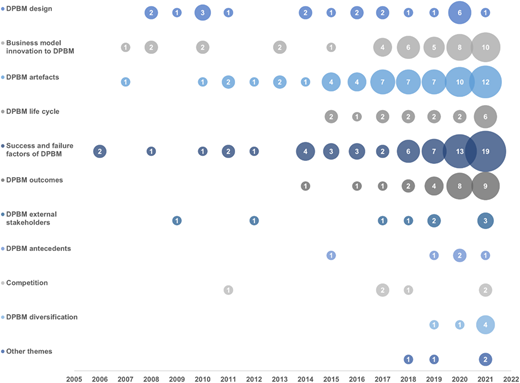
The coding process resulted in 11 DPBM research themes: (1) DPBM design, (2) Business model innovation (BMI) to DPBM, (3) DPBM artefacts, (4) DPBM life cycle, (5) Success and failure factors of DPBM, (6) DPBM outcomes, (7) DPBM external stakeholders, (8) DPBM antecedents, (9) Competition, (10) DPBM diversification and (11) other themes. Figure 4 presents a longitudinal analysis of the most researched themes in DPBM. Success and failure factors of DPBM have been the most researched topic over time, with significant growth in the last 2 years. This is followed by DPBM artefacts and BMI to DPBM, and DPBM design themes. Although the first articles on external stakeholders and competition were published in 2009 and 2011, respectively, the development of these topics presented a few gap years with no publications. DPBM life cycle, DPBM outcomes, DPBM antecedents and DPBM diversification are more recent themes. In the past 2 years, particularly, there has been particular growth in BMI to DPBM, DPBM artefacts, Success and failure factors of DPBM and DPBM outcomes themes.
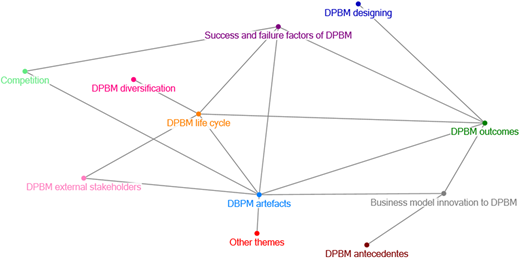
It is important to notice that 40 sources have been classified into two or more themes – revealing relationships across the different themes. Therefore, to make sense of these relationships, we analyzed codes as networks. Although this was not done to perform a quantitative analysis of the relationships between themes, it provided a convenient and interactive means to explore those relationships in a graphical format (Vial, 2019).
Figure 5 shows the relationship between all selective codes. DPBM artefacts, DPBM life cycle and DPBM outcomes are the themes with the most relationships with other selective codes in the network. Even though DPBM external stakeholders are present in the network, they are not linked to DPBM outcomes, revealing that this theme is mainly focused on analyzing outcomes for the digital platform owners.
The network reveals that the five other themes are directly linked with DPBM outcomes. The network also shows that the “other themes” category is linked with “DPBM artefacts” and “DPBM success and failure factors” themes.
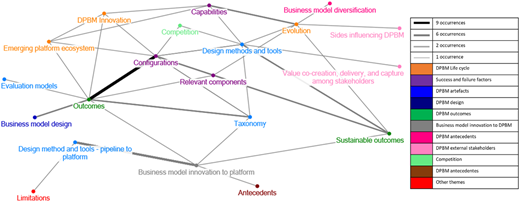
In order to better understand the relationships across the different themes (selective codes), we also analyzed the axial codes as a network. Figure 6 shows the relationship between 20 of the 41 axial codes that emerged from the analysis of the articles. The colors represent the selective codes in which these axial codes were grouped, and the different types of arrows represent the number of articles in which a relationship is present. The analysis of this network reveals that axial codes “Outcomes” and “Configurations” are central in the network and have the highest number of relationships, including the relationship between themselves (with nine occurrences).
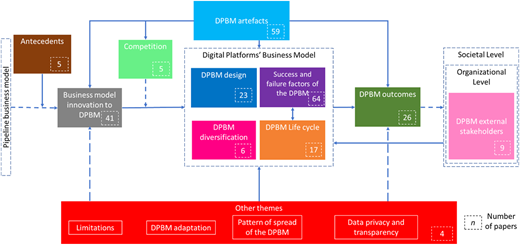
Based on an analysis of the codes as networks, Figure 7 presents our proposed framework summarizing current research on DPBM. The solid blocks represent main themes, and the arrows represent how these themes are related to each other (not implying causality or statistical relationship). While solid arrows and blocks represent the relationship of the selective and axial coding as a network (see Figures 5 and 6), dotted arrows and blocks are based on our findings from the literature review. Since the “Other themes” block contemplates unrelated sub-themes, it was broken down, showing its axial codes.
The next subsections describe each theme of the research on DPBM.
DPBM artefacts
“DPBM artefacts” emerged in 2007, and it is the most prominent theme in our sample. It discusses artefacts in the form of methodologies, frameworks, taxonomies and ontologies. The main contributions of these papers are methods and tools to drive the process of transforming pipeline BMs to platforms, as well as to identify failure and success factors and evaluate their associated outcomes. Approximately 65% have been published in journals. Nearly 78% (n = 47) of the articles are empirical and most of them use case study (n = 32) or design science (n = 9) methods. Table 12 presents sub-themes (axial codes), sources and theories in this theme.
Business model innovation to DPBM
The BMI to the DPBM theme is composed of articles that propose to transform pipeline businesses to platforms. This theme is characterized by non-empirical papers (54.8%; n = 17), and most of the works use industry as the level of analysis (83.9%; n = 26). The literature in this stream identifies the benefits of the existing digital platforms and analyzes industries whose enterprises have traditional BMs. The main purpose of these articles is to explain how these industries can have better outcomes by adopting DPBMs. We found 4 papers describing the transformation process from a pipeline BM to a DPBM, which contributes to identifying lessons learned in the process (Dell’Era et al., 2021; Gustavsson and Ljungberg, 2020; Jääskeläinen et al., 2021; Wesselius, 2008). Another significant characteristic of this theme is that, although using different BM frameworks, 34.1% (n = 14) of the studies do not discuss any theory. Table 13 presents sub-themes, sources and theories in this theme.
DPBM design
Articles within the DPBM design theme focus on proposing a BM to existing platforms. These studies mainly propose the design of the BM aiming at financial sustainability – e.g., Belleflamme and Jacqmin (2016), Dupont et al. (2017) and Hruskova (2017). However, there is a growing number of studies focusing on social sustainability (Okano et al., 2018; Wu et al., 2020). Even though frameworks were used for the development of the study, 47% of them (n = 11) do not discuss the theory. Table 14 presents sub-themes (axial codes), sources and theories in this theme.
DPBM success and failure factors
The different dimensions of the BM are formed by attributes, also known as “building blocks.” They describe functions, features, or actions of the firm. Distinct alternatives for each attribute are the configuration options. For example, the value delivery dimension can be formed by the customer relationships and distribution channels attributes and distribution channels can be configurated as web or application (Curtis, 2021). Therefore, this theme mainly categorizes studies that analyze the attributes of the DPBMs and highlight their patterns or compare their different configurations with the goal of identifying success and failure factors.
This literature cluster shows that differences in the design and execution of the BM generate different results that affect the success or failure of digital platforms (Piscicelli et al., 2018). This theme has the most powerful relationship with the “DPBM outcomes” (as shown earlier in Figure 7). Furthermore, this cluster of the literature has contributed to identifying relevant mechanisms and capabilities to support the evolution of DPBMs (Asadullah et al., 2018; Rong et al., 2018). On the other hand, it also has the largest number of papers that analyze one specific dimension of the BM (n = 12), i.e. they do not do a holistic analysis. This approach can be problematic considering that the success or failure of a business can hardly be attributed to a single reason (al Debei et al., 2016).
Most studies on this topic are empirical (75%; n = 48) and use case study as a research method (83.3%; n = 40). A critical issue is that 25% (n = 16) of the papers do not discuss the theory. Sub-themes, sources and theories used in this theme are presented in Table 15.
DPBM life cycle
This theme is composed of papers that examine the DPBM life cycle – how DPBM emerges, innovates its BM, evolves and declines. This research stream is mainly related to “DPBM Success and Failure Factors” and “DPBM outcomes” themes. Hence, it mostly contributes to the literature by suggesting that the success or failure factors depend on the phase of the DPBM life cycle. Most papers use single (50.0%; n = 9) or multiple (44.4%; n = 8) case studies. Table 16 shows sub-themes (axial codes), sources and theories in this theme.
DPBM outcomes
Although the first paper on this theme was published in 2014, it has the most significant number of relationships with the other topics in the field. Therefore, this theme demonstrates that the literature on DPBM has evolved from studies focused on understanding how this BM is characterized to analyze its impacts on organizations and society. At the organizational level, this literature assesses the implications of different BMs on organizational performance (Bivona and Cosenz, 2019; Rothe et al., 2018) as well as on the level of participation and perceived value of users (Clauss et al., 2019; Stofberg and Bridoux, 2019).
At the societal level, these studies identify that through the DPBM, it is possible to offer social actions and sustainability to different contexts (Okano et al., 2018). This literature cluster examines positive outcomes for regional development (Yun et al., 2017), the implementation of transportation that satisfies the needs of disabled people (Wu et al., 2020) and the improvement of sustainability in the food sector (Michelini et al., 2020). On the other hand, Shah and Shome (2019), while demonstrating the positive consequences of the DPBM in the Indian market, also outlined their negative consequences, such as the negative impact on the labor market. Table 17 presents sub-themes (axial codes), sources and theories in this theme.
DPBM external stakeholders
Papers in this theme mainly analyze the BM of companies that are external stakeholders of digital platforms (such as complementors). This literature cluster has contributed to analyzing relevant components of these companies' BMs that can lead to success in their ecosystem (Abbate et al., 2019; Chandna and Salimath, 2018; Crowley et al., 2012; Stecca et al., 2009). Another contribution refers to understanding how organizations that integrate the DPBM ecosystem can innovate their BM (Baber et al., 2019; Gatautis et al., 2017). Recent topics in this field use an active perspective to analyze stakeholders and how they can impact the DPBM (Trabucchi and Buganza, 2021) or change their own roles in the ecosystem (Park et al., 2021). This different perspective is important to understanding how value is created, delivered and captured among the various stakeholders (Schiavone et al., 2021). All papers in this theme are empirical, and most of them use case studies as a research method (78%; n = 7). Sub-themes, sources and theories in this field are presented in Table 18.
DPBM antecedents
Although many papers propose transforming pipeline BMs into a DPBM, only a few studies investigate the antecedents and drivers of this process. These studies provide evidence that trusted institution legitimacy, cooperative organizational model, founders' experiences, entrepreneurial orientation, industry influences, as well as environmental characteristics are relevant antecedents to pipelines BMs transform themselves in DPBM (Jääskeläinen et al., 2021; Rumble and Mangematin, 2015). Furthermore, this stream has identified that servitization is a relevant driver for DPBM (Kohtamäki et al., 2019). Table 19 presented the sub-themes, sources and theories in this field.
Competition
While digital platform competition is a prolific research theme in the field of economics, only a handful of studies in the field use BMs as a theoretical lens. Even though DPBM competition is a small research stream, it has significant theoretical and practical implications. Broos and Ramos (2017) use DPBM as a lens to discuss antitrust and argue that two-sidedness is not a feature of markets but of firms. In addition to this debate, Demil et al. (2018) argue that the BM is a choice of the firm; hence, the managers can select the relevant competitive landscape. It is quite clear that the phenomena of the digital platforms' BM have theoretical and practical implications for the strategy literature.
Wang et al. (2017) investigate the competition between licensing BM and the platform BM to understand when the platform BM is feasible. Results of this study suggest that when both BMs coexist, the platform model possesses an apparent advantage over the licensing model in dominating the market. Cozzolino et al. (2021) use a different approach to discuss competition between pipeline and DPBM. These authors examine how incumbent producers respond to digital entrant platforms by shifting between competitive and cooperative strategies. They conclude that the process is characterized by three sequential phases: (1) selective cooperation, (2) allied competition and (3) selective coopetition. Sub-themes, sources and theories in this field are presented in Table 20.
DPBM diversification
This is a recent topic in the literature that analyzes the synergies of managing multiple BMs and objectives (Reuter, 2021). During the evolution of a DPBM, new stakeholders are incorporated, and the organization tends to diversify how they do business; in other words, they start to work with a BM portfolio (Aversa et al., 2021). Even though DPBM diversification increases management complexity, it allows organizations to realize both for-profit and for-purpose value creation, specifically with a hybrid DPBM (Reuter, 2021; Sparviero, 2021). Hybrid DPBM can manage the tensions emerging from the parallel pursuit of economic and social goals (Sparviero, 2021). Thus, this theme contributes to solving a significant challenge of digital platforms: delivering sustainable value for multiple stakeholders, including socio and environmental aspects. Further, this cluster of the literature contributes to demonstrating potential convergence and challenges for DPBMs to add pipeline components and vice versa (Mody et al., 2020). Sub-themes, sources and theories in this field are presented in Table 21.
Other themes
There are other themes about DPBM that did not fit in the previous topics. The first one is related to data privacy in data-driven DPBM. Even though other themes introduce data privacy as an unintended impact of DPBM (Lin et al., 2021; Long and van Waes, 2021), only one paper analyzes DPBM in terms of the monetization of personal data – raising concerns about data privacy and transparency (Fahy et al., 2018).
Another topic in the literature is the analysis of how the different patterns of DPBMs spread among different sectors. Specifically, the authors investigate how new digital platforms mimic Uber and Airbnb’s BMs. The study concludes that new platforms imitate previous BMs across distant sectors to avoid competition while replicating activities in ever-new resource settings (Geissinger et al., 2021).
Another aspect investigated is how digital platforms adapt their BM to a highly regulated labor market. In this case, analyzing how Uber adapted their BM to the Norwegian regulation of the taxi market (Oppegaard, 2021). This case shows that even though many governments have changed the regulations to adapt to new technologies, digital platforms have changed their BM to adapt to existing regulations.
The last paper classified in “other themes” analyzes the limitations of DPBM. While papers on BMI to DPBM theme discuss benefits for pipeline BM to migrate their BM to digital platforms, our study found just one paper that analyzes the limitations of DPBM for some traditional industries (Orekhova, 2019). This article highlighted some restrictions on the use of this DPBM for industrial enterprises in the Russian context. Table 22 presents sub-themes, sources and theories used in papers classified as “other themes”.
Conclusion and future directions
Our review of the literature at the intersection of digital platforms and BMs reveals that research in this domain is fragmented across a number of inter-related fields. Publications are also scattered across a multitude of journals, and many of them do not provide a clear definition of the main concepts used (e.g., BM) or use different concepts interchangeably (e.g., BM and strategy). Unclear and unconverging concepts tend to produce imprecise literature, which inhibits the advancement in the field of research.
This paper highlights a rich body of literature that contributes to our understanding of how this research field is organized and proposes an integrative definition of DPBM. Further, we expand our contribution by presenting avenues for advancing knowledge in this field. Specifically, we presented three pathways for future research that can contribute to understanding and forecasting the impacts of digital platforms on society.
First, scholars should increase the focus on the alignment between value creation and value capture to innovate DPBMs. This alignment is particularly important because these models rely on the ability to orchestrate interactions among the actors in the ecosystem (Parker et al., 2016). As a result, changes in the BM of the focal company may imply corresponding adjustments in the BMs of other ecosystem participants (Aji et al., 2018). Moreover, actors may hold different perceptions of value and pursue conflicting objectives and interests (Velter et al., 2020). Therefore, innovating a DPBM requires articulating changes with other ecosystem actors to ensure the alignment of value creation and capture for all stakeholders.
Hybrid DPBMs represent a relevant unit of analysis to explore this gap, as the complexity of aligning diverse interests tends to be greater in such models – where achieving both social and economic sustainability is essential. Furthermore, DPBMs are not inherently sustainable; collaborative approaches with stakeholders are necessary to incorporate responsibility into BMI (Long and van Waes, 2021).
While the BMI literature has largely focused on internal organizational factors (Sjödin et al., 2020), drawing on theories such as the resource-based view, dynamic capabilities and entrepreneurship (Achtenhagen et al., 2013; Demil and Lecocq, 2010), we suggest that incorporating perspectives from open systems (Berglund and Sandström, 2013), stakeholder theory (Laczko et al., 2019) and responsible innovation (Long and van Waes, 2021) could offer valuable insights into this issue. Accordingly, future research should examine:
How do governance mechanisms in hybrid DPBMs influence the alignment of value creation and capture among marginalized stakeholders?
What are the dominant failure patterns of hybrid DPBMs in highly regulated sectors such as healthcare or finance?
These questions can be addressed through longitudinal multiple-case studies of platforms operating in domains such as education, mobility or sustainability, where social impact is prioritized. Such studies could adopt stakeholder theory or open systems theory to explore how platforms navigate divergent objectives and expectations. Additionally, comparative cross-national research may shed light on how institutional environments in emerging markets shape alignment practices in the absence of strong regulatory frameworks.
Second, future studies could focus on artefacts and success factors of hybrid DPBM. Overall, the literature on DPBM is market-oriented, and only a few studies focus on analyzing how these BMs can affect social outcomes. Therefore, frameworks, taxonomies and methods to analyze hybrid DPBM can contribute to improving the social impact of digital platforms while minimizing unintended and negative impacts. In addition, specific artefacts to hybrid DPBM could be used to analyze the success and failure factors of these BMs. This approach could contribute, for example, to identifying which configurations could lead to optimal social outcomes (Kohtamäki et al., 2019).
Therefore, we propose design science research to develop artefacts such as sustainability scorecards or stakeholder alignment matrices, tailored to hybrid platform contexts and experimental and simulation-based research to test how these artefacts influence user behavior, platform governance decisions or ecosystem-wide performance metrics.
Finally, as an extension to the second point, it is important to further our understanding of the unintended consequences of DPBM (Bocken et al., 2013). Our review identifies that most of the studies have been focused on the positive side of value co-creation (Andreassen et al., 2018). We argue that it is relevant to understand how value can be destroyed and what the potential negative outcomes are for different stakeholders (Bocken et al., 2013).
Hence, we call for empirical research that investigates:
What unintended consequences do DPBMs generate for informal workers in platform economies in Latin America, Africa, or Southeast Asia?
How do digital platforms amplify or mitigate inequalities across stakeholder groups?
Mixed-methods approaches, combining interviews, platform data and policy analysis, are well-suited for this line of inquiry. Such studies could draw on social entrepreneurship and social innovation literatures to examine tensions between inclusion and efficiency. Contextualizing research in developing economies will also help uncover dynamics often invisible in mature markets.
This research agenda is especially important in developing countries, as digital platforms can potentially amplify inequalities (Bonina et al., 2021). For example, how DPBMs impact employability and the overall economic scenario is still unclear (Münzel et al., 2018). For this purpose, combining literature on BMs, social entrepreneurship and social innovation can be an interesting approach for future studies in the field. Beyond these avenues, future research may use our framework to investigate under-researched relationships or themes, for example, antecedents and limitations of BM innovation to DPBM, the pattern of spread of the DPBM or DPBM adaptation. By addressing these questions with more contextualized, theoretically informed and methodologically diverse studies, future research can offer deeper insights into the evolution, performance and social consequences of DPBMs.
Although great care was taken to ensure that the choices made adhered closely to selecting a representative sample of paper for our study, we recognize that our database choices, as well as inclusion and exclusion criteria, represent a limitation of this study.
The authors sincerely thank the Editor, the anonymous reviewers, and the editorial team for their valuable contributions throughout the review and publication process. The reviewers' constructive comments and the editorial team's careful work in preparing the manuscript, including their attention to the references and overall presentation, greatly improved the quality, clarity, and consistency of this article.
The supplementary material for this article can be found online.